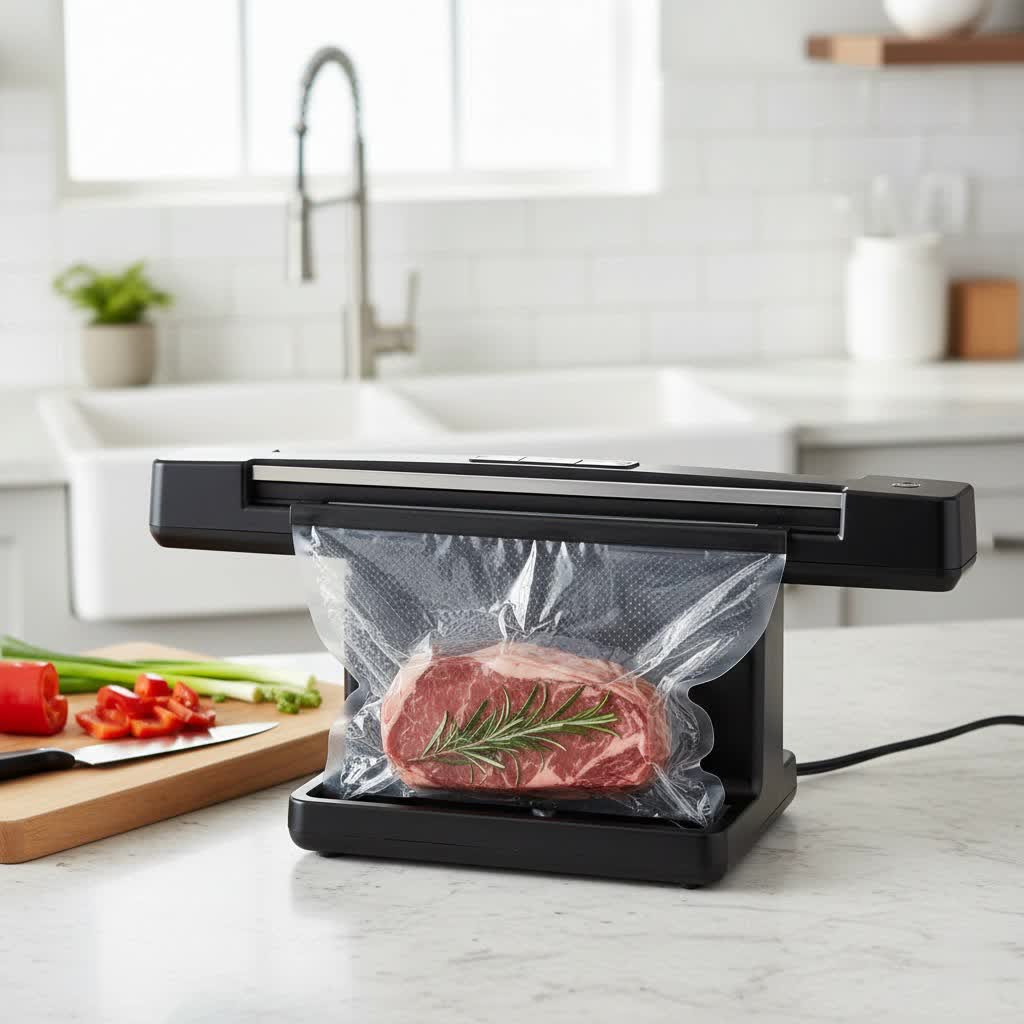
Every household, adventurer, and athlete understands the undeniable value of a reliable ice pack. Whether soothing a sprained ankle, keeping provisions fresh on a camping trip, or packing a lunch for work, the need for sustained, flexible cold is constant. While store-bought options exist, they often fall short in durability, flexibility, or cost-effectiveness. What if you could craft superior, reusable ice packs right in your own kitchen? The answer lies in leveraging the power of your vacuum sealer, transforming simple household ingredients into remarkably effective cold therapy solutions. This guide will walk you through everything you need to know, from selecting the right ingredients to mastering the sealing technique, ensuring your homemade ice packs are ready for any challenge.
What is a Vacuum Sealer and Why Use It for Ice Packs?
A vacuum sealer is an appliance designed to remove air from a package before sealing it, typically to preserve food. It consists of a pump that evacuates air and a heating element that creates an airtight seal on specialized bags. While commonly associated with extending the shelf life of groceries, a vacuum sealer’s robust sealing capabilities make it an ingenious tool for creating highly durable and leak-proof homemade ice packs. By enclosing a liquid solution within a heavy-duty, air-evacuated bag, you create a resilient barrier that minimizes leaks and maintains flexibility, far surpassing the reliability of standard zipper-lock bags.
Benefits of Homemade Vacuum-Sealed Ice Packs
Crafting your own ice packs with a vacuum sealer offers a multitude of advantages over conventional methods, providing a superior cold therapy and cooling solution for various needs.
Superior Cold Retention & Flexibility
|
Our Picks for the Best Vacuum sealer in 2026
As an Amazon Associate I earn from qualifying purchases.
|
||
| Num | Product | Action |
|---|---|---|
| 1 | Bonsenkitchen Vacuum Sealer Machine | Compact Food Sealer for Kitchen Storage & Meal Prep | Multiple Modes | External Vacuum System | 5 Bags, Silver |

|
| 2 | 95Kpa Precision Pro Vacuum Sealer, with Double Heat Seal & Dual-Pump for Dry/Moist Food, 2X Strength, Food Vacuum Sealer Machine with Easy-Lock Handle, Built-in Cutter & Bag Storage, Stainless Steel |
|
| 3 | Bonsenkitchen Vacuum Sealer Machine, Globefish Technology for Perfect Vacuum Sealing, Powerful Low-Noise Food Vacuum Sealer with Easy Handle Design, Built-in Cutter & Bag Storage, 1 Bag Roll & 10 Bags |
|
| 4 | MegaWise Vacuum Sealer Machine | 80kPa Suction Power| Bags and Cutter Included | Compact One-Touch Automatic Food Sealer with External Vacuum System | Dry Moist Fresh Modes for All Saving needs |
|
| 5 | Vacuum Sealer Machine 75KPa Food with 6-in-1 Dry/Moist Modes & Digital Timer, Compact Lightweight Design, Built-in Cutter + 10 Bags (Black Silver) |
|
| 6 | Potane Precision Vacuum Machine,Pro Food Sealer with Built-in Cutter and Bag Storage(Up to 20 Feet Length), Both Auto&Manual Options,2 Modes,Includes 2 Bag Rolls 11”x16’ and 8”x16’,Compact Design |
|
| 7 | Gasbye 95kPa Precision Vacuum Sealer Machine, Double Heat Seal for Dry/Moist Food, Easy-Lock Handle, Built-in Bag Storage & Cutter, Progress Display, Pulse Mode, Removable Drip Tray, Silver |
|
| 8 | Vacuum Sealer Machine 95KPA Powerful Suction, 10s Fast Seal, Dry & Moist Modes, Compact Food Vacuum Sealer with 30 Bags Included, Automatic Food Saver for Meal Prep, Sous Vide & Kitchen Storage |
|
| 9 | Vacuum Sealer for Food, 95kPa Food Saver Vacuum Sealer Machine, 135W Fast-Sealing with Easy Tear Cutter, Built-in Bag Storage, 9-in-1 Compact Food Vacuum Sealer Machine with 10 ft Bag Roll |
|
| 10 | Food Vacuum Sealer Machine, 95KPa Powerful Food Saver with Dry/Moist/External Vacuum Modes, Built-in Cutter & Bag Storage, Single/Double Sealing, 1 Bag & 15 Pre-cut Bags |
|
Unlike solid ice, which freezes into an unyielding block, homemade ice pack solutions, often made with alcohol or dish soap, remain semi-flexible or slushy even when deeply frozen. This pliability allows the pack to conform perfectly to the contours of your body or the items in your cooler, delivering more efficient and evenly distributed cold. The specialized solutions also often boast a lower freezing point than water, which can contribute to longer-lasting coldness.
Cost-Effectiveness & Customization
The ingredients for DIY ice packs are inexpensive and readily available. Think rubbing alcohol, water, and perhaps a few drops of food coloring. This makes creating a stash of custom-sized ice packs far more economical than repeatedly purchasing single-use or specialized gel packs. With vacuum sealer rolls, you have the freedom to cut bags to any dimension, perfectly tailoring your ice packs for specific uses, from small lunchbox coolers to large injury wraps.
Enhanced Durability & Leak Prevention
One of the most significant benefits of using a vacuum sealer is the superior seal it provides. Standard freezer bags are prone to leaks and punctures, especially when filled with liquids that freeze and expand, or when repeatedly handled. Vacuum sealer bags, being thicker and designed for airtight seals, offer exceptional durability and a virtually impenetrable barrier against spills. This is particularly crucial for solutions containing alcohol or dish soap, where leaks could be messy or irritating.
Versatile Applications
Homemade vacuum-sealed ice packs are incredibly versatile. They are perfect for alleviating muscle aches and swelling, keeping food and drinks chilled in coolers, or even maintaining the temperature of sensitive items during transport. Their robust design means you can rely on them in various demanding situations, from outdoor adventures to everyday household use.
Essential Ingredients for Your DIY Ice Packs
The secret to a flexible, long-lasting ice pack lies in the solution you choose. Here are the most popular and effective mixtures, designed to prevent a solid freeze and maintain malleability.
Rubbing Alcohol and Water Solution
This is the most widely recommended and effective mixture for creating pliable ice packs. Rubbing alcohol (isopropyl alcohol) has a lower freezing point than water, preventing the entire solution from turning into a solid block of ice.
- Ratio: A common and effective ratio is 1 part rubbing alcohol to 2 parts water. For example, 1 cup of 70% isopropyl alcohol to 2 cups of water. You can adjust the ratio slightly; more alcohol will result in a slushier pack, while less will make it firmer.
- Benefit: Provides excellent flexibility and cold retention, making it ideal for therapeutic use. A few drops of food coloring can be added for aesthetic appeal and to differentiate it from other freezer contents.
Dish Soap
Surprisingly, liquid dish soap, particularly thicker varieties, makes for an excellent gel-like ice pack. It freezes to a soft, moldable consistency that is very effective for cold therapy.
- Preparation: Simply fill a vacuum sealer bag about halfway or two-thirds full with liquid dish soap.
- Benefit: Creates a very consistent gel-like texture that remains soft and conforms well. It’s also safe and readily available.
Saltwater or Corn Syrup
Other household items can also be used, though they may offer slightly different properties.
- Saltwater: Adding a significant amount of salt to water lowers its freezing point, resulting in a slushier pack. A ratio of 2 tablespoons of salt to 2 cups of water is a good starting point, though experimentation might be needed to achieve desired consistency.
- Corn Syrup: Corn syrup also freezes to a flexible, gel-like state. Fill a bag halfway with corn syrup for a pliable pack. While effective, it’s generally considered stickier and messier if a leak were to occur.
For all solutions, ensure you leave adequate headspace in the bag (at least 2-3 inches) to accommodate any expansion as the liquid freezes and to allow for proper sealing.
Types of Vacuum Sealers for DIY Ice Packs
Choosing the right vacuum sealer can significantly impact the ease and success of making your own ice packs, especially when dealing with liquids. Different types of sealers offer varying capabilities for handling moist contents.
External Suction Vacuum Sealers
These are the most common type for home use. They work by placing the open end of a textured bag into a sealing channel, then drawing air out before sealing.
- Pros: Generally affordable, compact, and effective for most solid foods. Many models now come with a “moist” setting or a “pulse” function, which are invaluable for sealing liquids without drawing them into the machine. The pulse function allows manual control over the vacuum, letting you seal just before the liquid reaches the seal bar.
- Cons: Can be challenging to use with truly liquid solutions if not pre-frozen or if lacking a moist/pulse function, as the liquid can be sucked into the machine, leading to a failed seal or damage.
Chamber Vacuum Sealers
Primarily used in commercial settings, chamber sealers enclose the entire bag within a chamber, equalizing the pressure inside and outside the bag before sealing.
- Pros: Ideal for sealing liquids, as the pressure equalization prevents liquids from being drawn out of the bag. They create the most reliable and strongest seals.
- Cons: Significantly more expensive, larger, and heavier than external suction models, making them impractical for most home users focused primarily on ice packs.
Handheld Vacuum Sealers
These small, battery-operated devices are designed for use with special zipper-lock bags or containers.
- Pros: Extremely portable and convenient for light-duty sealing.
- Cons: Typically provide a much weaker vacuum and less durable seal compared to other types. They are generally not suitable for sealing liquids in a way that creates a robust, long-lasting ice pack capable of withstanding freezing and repeated use without leaking.
For the purpose of making durable DIY ice packs, an external suction vacuum sealer with a “moist” setting or “pulse” function is usually the best balance of cost, functionality, and convenience for home users.
Comparing Vacuum Sealer Features for Ice Pack Creation
When selecting a vacuum sealer for creating homemade ice packs, certain features become more critical due to the liquid nature of the contents. Here’s a comparison of key attributes to consider:
| Feature/Category | Description | Relevance for Ice Packs (Liquids) —————-